
The Good, the Bad, and the Oily: What’s Really in Your Avocado Oil?


For many of us, dietary fat is part of nearly every meal. We cook with oil, add dressing to salads, snack on nuts, spread avocado on toast and encounter fats in countless packaged foods. Yet few areas of nutrition have been surrounded by as much confusion and misinformation.
For years, fat was treated as something to avoid. We now understand that fat is not simply extra calories or something the body stores.
It is an essential nutrient that supports energy production, brain and nervous-system health, cell structure, hormone signaling and the absorption of several important vitamins.
The goal does not necessarily need to be eating as little fat as possible. Instead, it is about understanding which fats support the body, recognizing when portions become excessive and making sure the foods we purchase actually contain what their labels promise.
Before delving into the recent avocado oil label controversy, it helps to know how dietary fats play a role in our physiology and overall health.
How Does Dietary Fat Actually Work?
When we eat fat, the digestive system breaks it down into fatty acids and other smaller components that can be absorbed and used throughout the body.
These fatty acids can be burned for energy, stored for future energy needs or incorporated into cell membranes and signaling molecules. Dietary fat also helps the body absorb vitamins A, D, E and K, which are known as fat-soluble vitamins because they require fat for proper absorption.

Fat also helps support:
Brain and nervous-system function
Healthy cell membranes
Hormone production and cellular communication
Skin and hair health
Temperature regulation and organ protection
Satisfaction and fullness after meals
A steady source of stored energy
In other words, fat is not biologically unnecessary. The body depends on it.
Most importantly, dietary fat and body fat are not the same thing. Eating fat does not automatically cause body-fat gain. Overall calorie intake, activity, metabolism, food quality and many other factors influence how the body stores energy.
The Potential Benefits of Dietary Fat
When consumed in appropriate amounts and obtained from quality sources, fat can be an important part of a healthy lifestyle.
Healthy fats can help support:
Cardiovascular health
Normal cholesterol balance
Brain and cognitive function
Healthy inflammatory regulation
Nutrient absorption
Satiety and appetite regulation
Consistent energy between meals
Certain fatty acids are considered essential because the body cannot make them on its own. These include omega-3 and omega-6 fatty acids, both of which contribute to cell structure and normal biological signaling.
The important principle is that more fat is not necessarily better—and less fat is not automatically healthier. Ideally, fat intake should provide the body with essential nutrients and sufficient energy without consistently exceeding an individual’s needs.
When Fat Intake Starts Working Against You
Fat is more energy-dense than protein or carbohydrates. It's good to think of these macro-molecules we consume in terms of the energy they provide which we portray through their caloric value. Protein and carbohydrates are both 4 calories per gram, while fat is 9 calories. This does not make fat inherently unhealthy, but it does mean that portions can add up quickly.
Regularly consuming more energy than the body needs may contribute to unwanted weight gain, regardless of whether that energy comes from fat, carbohydrates or protein. However, heavily processed foods that combine refined carbohydrates, added sugars, sodium and large amounts of fat can make overconsumption particularly easy.
The type of fat also matters.
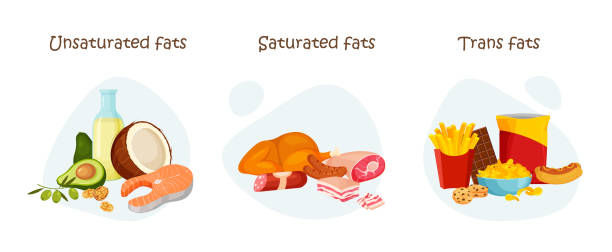
Diets containing excessive saturated fat may raise LDL cholesterol in many individuals. Saturated fats are commonly found in fatty meats, butter, full-fat dairy products, coconut oil and palm oil.
Artificial trans fats are a greater concern because they can raise LDL cholesterol while lowering protective HDL cholesterol. Most artificial trans fats have been removed from the American food supply, but checking ingredient lists for partially hydrogenated oils remains a worthwhile habit.
Eating too little fat can create a different set of concerns. Chronically inadequate fat intake may make it more difficult to absorb fat-soluble vitamins, obtain essential fatty acids and maintain normal hormonal, neurological and cellular function. Health is rarely found at either extreme.
Healthy vs. Unhealthy Fat Sources
Where your dietary fat comes from matters.
Monounsaturated and polyunsaturated fats are generally among the better choices. They are found in foods such as:
Avocados and olives
Extra-virgin olive oil
Nuts and seeds
Fatty fish
Algae-derived foods and oils
Chia seeds and flaxseeds
Many liquid plant oils
These foods often provide additional nutrients beyond fat itself, including fiber, protein, vitamins, minerals and naturally occurring plant compounds.
Less-helpful sources frequently include deep-fried foods, heavily processed snacks, processed meats and packaged baked goods. These foods may combine lower-quality fats with refined carbohydrates, added sugars, sodium and artificial ingredients.
This does not mean that every food containing saturated fat is harmful or that every product made with plant oil is healthy. It means consumers should consider the entire food rather than judging it by one ingredient.
A chip cooked in avocado oil is still a chip.
What the Avocado Oil Investigation Found

Avocado oil has become a popular choice because it contains primarily monounsaturated fats, has a mild flavor and can be used in many forms of cooking. As its popularity has increased, “made with avocado oil” has also become a valuable marketing claim.
A recent University of California, Davis investigation raises questions about whether consumers are always receiving what they believe they are purchasing.
Researchers tested 54 processed foods—including chips, mayonnaise and salad dressings—that listed avocado oil as their only oil ingredient. They found that 48 of the products had chemical profiles inconsistent with pure avocado oil.
Researchers allowed for natural differences in avocado varieties and growing regions, but 89% of the avocado-oil products still failed the study’s authenticity criteria. By comparison, only one of 20 tested products labeled as containing olive oil failed similar testing.
This does not mean that every avocado-oil product is adulterated or immediately dangerous. The products tested represent only a portion of the market. The findings do, however, raise important concerns about ingredient transparency and supply-chain oversight.
In some cases, manufacturers themselves may not know that an oil has been substituted or diluted if it was obtained through third-party brokers or suppliers without sufficient purity testing.
One of the most useful lessons from the avocado-oil investigation extends beyond avocado oil itself. Front-of-package claims are designed to capture attention. Phrases such as “made with avocado oil,” “natural,” “plant-based” or “heart healthy” may emphasize one appealing feature without providing the complete nutritional picture.
A product can contain a desirable ingredient and still be highly processed, low in nutrients or easy to overconsume. In other cases, the featured ingredient may be present in a much smaller amount than consumers expect—or, as the UC Davis investigation suggests, may not be authentic.
The simpler the food, the easier it is to understand what you are putting into your body.
How to Make Healthier Fat Choices
Making better choices does not require eliminating every processed food or finding one supposedly perfect cooking oil. A few practical habits can make a meaningful difference:
Read the entire ingredient list, not just the claims on the front.
Favor whole-food fat sources such as nuts, seeds, olives, avocados and fatty fish.
Replace some saturated fats with monounsaturated or polyunsaturated fats.
Choose manufacturers that discuss sourcing, testing and quality control.
Be cautious when a premium oil is offered at an unusually low price.
Buy oil in quantities you can use while it is still fresh.
Store oils tightly sealed and away from heat, oxygen and direct light.
Avoid repeatedly overheating or reusing cooking oil.
Replace oil that develops a stale, waxy, bitter or paint-like smell.
Pay attention to portions, even when consuming healthier fat sources.
Use Fat to Support Your Physiology—Not a Marketing Claim
Perhaps the healthiest way to think about dietary fat is as an essential part of a complete nutritional pattern.
Choose fats for their quality and purpose. Use them to make nutrient-dense meals more satisfying, support the absorption of vitamins and provide essential fatty acids. Avoid assuming that a premium oil can transform an otherwise heavily processed food into a health food.
If a product is marketed around one particular oil, ask a few additional questions:
What else is in the product? How processed is it? Does the manufacturer verify its ingredients? Am I choosing it because it is truly nutritious—or because the packaging makes it sound healthier?
Those questions often reveal more than the front label.
The Bottom Line
The key is source, quality and balance.
Favor unsaturated fats from whole and minimally processed foods. Use saturated fats thoughtfully. Avoid artificial trans fats and repeatedly degraded oils. Read ingredient lists carefully and choose companies that can demonstrate transparency throughout their supply chain.
Fat is essential to the body. A health-focused label is not.
Learning to recognize that difference is one of the most important parts of making informed nutritional choices.
This information is provided for educational purposes only and is not intended to replace medical advice. Always consult your healthcare provider before making significant changes to your diet or treatment plan.


Comments